
Your PPC Budget Is Leaking. Here’s Where Industrial B2B Advertisers Get It Wrong in 2026
01/09/2026 | Digital Marketing | 15 minutesYour PPC budget probably isn’t being wasted because Google Ads has become too expensive. It’s being wasted because your account is optimising for actions that bear little resemblance to revenue.
A form submission looks like success in the dashboard. So does a phone call, a brochure download or a visit to the contact page. But if that enquiry is from a student, a job applicant, a domestic buyer, an existing customer looking for support or worse yet, someone trying to sell you something, you’ve paid for activity rather than opportunity.
That distinction is expensive in industrial B2B. Paid leads average $691 in manufacturing, $371 in engineering and $670 in transport and logistics. These are US benchmarks, so they won’t necessarily automatically translate for UK firms but they’re a useful warning about the economics: when a lead costs hundreds rather than tens of pounds, poor qualification and weak attribution become board-level problems.
Yet plenty of businesses still manage PPC as if the job ends when somebody fills in a form.
It doesn’t. A cheap lead that will never buy is more wasteful than an expensive lead that becomes a £250,000 contract.
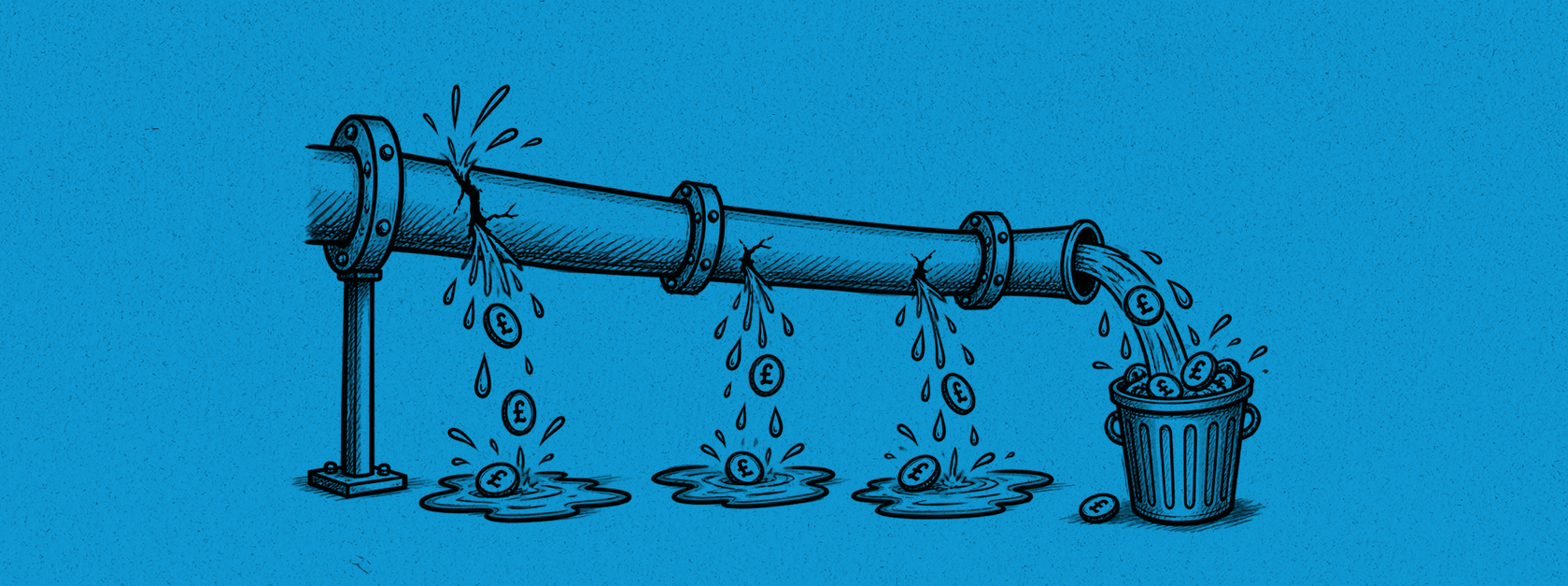
The leak is rarely one dramatic mistake. It sits across the whole system: the budget, the campaign type, the keywords, the conversion signals, the landing page and the handover to sales. Fixing it means looking beyond the comforting numbers Google puts at the top of the screen.
The Cheapest Lead in Your Account Could Be the Most Expensive

Cost per lead is useful. It just isn’t a business outcome.
Suppose a fabrication business runs two campaigns. Campaign A produces 40 enquiries at £80 each. Campaign B produces 12 enquiries at £220 each. On the surface, Campaign A wins comfortably.
Then the sales team review the pipeline.
Campaign A generated pricing requests for one-off consumer jobs, CV submissions, requests for materials the company doesn’t stock and small orders below the minimum contract value. One enquiry became a qualified opportunity worth £12,000.
Campaign B generated six qualified opportunities from OEMs and two contracts worth £180,000 between them.
You don’t need to be Alan Sugar to work out which campaign should receive more budget.
This sounds obvious when the revenue is visible but inside many ad accounts, it isn’t. The platform sees 40 conversions versus 12. If automated bidding is told to find more conversions, it will pursue the audience that behaves like Campaign A. The platform has done exactly what it was asked to do.
The machine isn’t making a commercial mistake. You’re feeding it the wrong definition of success.
Raw CPL also varies sharply between sectors. Blended lead costs sit at $227 for construction, $287 for engineering, $553 for manufacturing and $588 for transport and logistics. This is precisely why a logistics firm shouldn’t borrow a CPL target from a construction campaign and declare its own activity broken. Nor should a specialist engineering consultancy be compared with a local trade supplier serving a broad, high-volume market. Apples and oranges.
Your real benchmarks need to reflect:
- The value and margin of the work
- The proportion of enquiries that sales accepts
- The rate at which accepted leads become quoted opportunities
- The quote-to-order conversion rate
- The time it takes revenue to appear
- The lifetime value of repeat and maintenance business
The practical metric isn’t simply cost per lead. It’s cost per sales-qualified opportunity, followed by pipeline value and acquired revenue.
That requires the ad platform, CRM and sales process to agree on what a worthwhile enquiry looks like. If marketing reports leads while sales reports orders, the gap between them is where the budget does its best impression of a black hole. That gap is exactly what we unpacked in why B2B lead generation is failing: marketing celebrates volume, sales can’t see the value and the two never reconcile.
This is especially important in manufacturing marketing, where one buyer may request a sample today, complete technical validation in three months and place the first production order six months later. Last-click reporting will flatten that sequence into a form submission. It won’t tell you whether the campaign attracted the right application, volume, specification or commercial potential.
So what’s the solution? Start assigning values to different conversion outcomes. A general contact form shouldn’t carry the same weight as an RFQ containing a target quantity, material specification and delivery requirement. A brochure download shouldn’t be treated like a booked technical consultation. Better still, import qualified leads and closed revenue from your CRM so the bidding system can learn from commercial progress.
Until you do that, every optimisation is built on sand.
Performance Max Isn’t a Strategy

Google’s AI driven Performance Max is seductive because it offers reach, automation and a neat performance graph without demanding much day-to-day judgement. However that doesn’t make it the right default for industrial B2B.
Traditional Search campaigns are delivering 553% ROAS for B2B lead generation compared with 436% from Performance Max suggesting that, for now at least, marketers are beating the robots. That’s not a reason to delete every Performance Max campaign but it is a reason to stop and think before diverting budget from human resources into automation.
Industrial buying intent is often expressed in precise language. Someone searching for “316 stainless hygienic pipework fabricator UK” is telling you far more than somebody who watched a related video, visited an industry website or matched a broad audience signal.
Search lets you act on that precision. You can separate applications, products, industries and geographic markets. You can control the queries that trigger ads. You can tailor the message to the specification and send the buyer to the most relevant page.
Performance Max blends inventory across Search, Display, YouTube, Discover, Gmail and Maps. That can help when you’ve got strong creative, meaningful audience data and reliable revenue signals. It can also obscure where the spend went and which placements produced genuine business.
The usual failure isn’t the campaign type alone. It’s the combination of Performance Max with weak inputs, such as:
- One generic asset group covering the entire product range
- A final URL expansion setting that sends traffic to unsuitable pages
- Audience signals based on website visitors of every kind
- Conversion goals that include low-value actions
- No imported sales outcomes
- Brand traffic mixed into supposedly incremental results
- Sparse exclusions and little scrutiny of search themes
Give that system a vague “contact form submitted” signal and it will simply find more people likely to submit forms. It can’t infer that you need procurement managers at UK food manufacturers planning a production-line upgrade above £100,000.
Search has its own failure mode, of course. Broad match combined with automated bidding can produce the same loss of control. But the answer isn’t to reject automation: you have to earn the right to automate.
Begin with a structure that reflects how your customers buy. Group tightly related, commercially meaningful searches. Build exclusions from real query data. Separate branded demand from non-brand acquisition. Feed back qualified outcomes. Then test broader reach against a clean baseline.
For some businesses, Performance Max will earn a defined role in remarketing, brand reinforcement or incremental discovery. For others, disciplined search will remain the core acquisition engine, even in the face of increased rates of buying decisions starting with AI chatbots instead of Google. Industrial supplies campaigns, for example, are producing Search ROAS of 350% to 450%, helped by repeat purchasing behaviour.
The question isn’t whether Google wants you to adopt its newest campaign type. It’s whether you can prove what that campaign contributed to your pipeline.
If you can’t, convenience is being mistaken for performance.
You’re Buying the Wrong Searches

Open the search terms report. That’s where the politest version of your targeting strategy meets what people actually typed.
The gap can be brutal.
An industrial electrical contractor bids on “factory electrical installation” and pays for domestic rewiring searches. A polymer manufacturer targets “custom moulding” and attracts hobbyists. A logistics operator bids on “warehouse solutions” and receives traffic from jobseekers, software students and households looking for self-storage. Waste. Of. Time.
These clicks aren’t random bad luck. They’re the result of account structure, match types, negative keywords and landing-page signals.
Industrial and commercial Search clicks now average $5.87, above the $5.42 all-industry figure. At that cost, 100 irrelevant clicks consume nearly US$600 before a single sensible conversation begins. In a UK account the actual CPC will differ, but the lesson survives the Atlantic crossing.
Most negative keyword lists are far too basic. “Jobs”, “salary”, “free” and “DIY” are useful, but they’re only the start. A proper exclusion strategy should consider:
- Consumer and domestic intent
- Employment, apprenticeships and training
- Manuals, drawings and purely informational research
- Used equipment, rentals or repairs if you don’t provide them
- Materials, standards or processes outside your capability
- Countries and regions you cannot serve
- Order sizes below your commercial threshold
- Competitor support queries
- Existing-customer service searches that should use another route
Don’t blindly exclude every informational query. Technical research can be an early commercial signal, particularly when content marketing supports a long buying journey. The distinction is intent. A design engineer researching tolerances may be valuable whereas a teenager seeking a GCSE project diagram probably isn’t.
Your keyword structure should also mirror commercial differences within the business. “Conveyor systems” is not one market. Food-grade conveyors, warehouse sortation equipment, replacement conveyor belts and maintenance services have different buyers, margins and sales processes. Putting them into one campaign makes budgets compete without revealing which opportunity the business truly wants.
The ad copy must qualify as well as persuade. State the sector, capability, location, accreditation or minimum scale where it helps deter the wrong click. “Industrial CNC machining for production runs” may attract fewer clicks than “expert CNC machining”, but no good marketer is going to argue for quantity over quality.
The same applies to construction marketing. If you only work on commercial projects, say so. If your engineering team serves principal contractors rather than homeowners, say so. If you cover the Midlands and South East rather than the whole UK, don’t buy national traffic and hope visitors work it out later.
Also worth remembering to use terminology your buyers use rather than those you might be used to within the industry. We see this a lot in failed SEO campaigns too. A flashy website promising “integrated, end-to-end built environment solutions through collaborative stakeholder engagement and value-driven project lifecycle management” wins considerably less business than “We build £2m+ commercial and industrial projects across the South East.” If in doubt, KISS.
Don’t get trapped into thinking a high click-through rate is automatically good either. Industrial and commercial campaigns average a 6.57% click-through rate and an 8.20% conversion rate, both close to the wider market. You can beat either number by making promises to everybody. You can also wreck lead quality in the process.
Good targeting excludes as deliberately as it attracts.
Your Landing Page Is Making Sales Do the Qualifying

The ad promises specialist expertise. The landing page says, “We provide innovative solutions tailored to your needs.”
That sentence could belong to a software reseller, an accountancy firm or a company selling office plants. It tells an industrial buyer nothing.
Your prospects arrive with practical questions. Can you handle the material? Do you meet the standard? Have you worked in their operating environment? Can you deliver at the required scale? What happens after installation? Where do you operate? Who will own the project?
If the page doesn’t answer those questions, two things happen. The right buyer leaves because the evidence is missing. The wrong buyer submits a vague enquiry because nothing has disqualified them.
A useful PPC landing page should establish, quickly:
- What you actually provide. Use the terminology customers use, not a slogan developed for the company brochure.
- Who it’s for. Name the applications, sectors, project types and buyer needs you serve.
- Where the boundaries sit. Geography, minimum volume, typical project value, lead time and technical scope can all protect the budget.
- Why you’re credible. Accreditations, relevant projects, production capability, response times and verifiable outcomes beat broad claims about quality. Name your expertise.
- What the buyer should do next. Ask for the information your team genuinely needs, without turning the form into a tender document.
Obviously there’s a balance to strike. A form with only name, email and message generates incomplete enquiries whereas a form with 22 required fields punishes legitimate buyers who are still defining the requirement and give up after five minutes of being grilled by a form.
Best practice is to use progressive qualification. Ask for company name, requirement type, location and a concise project description at the first conversion for minimal friction. Then you can gather detailed specifications once a human has established fit. For urgent or technically complex needs, offer a direct route to the appropriate team. A lot of people still love using the phone.
The page also needs message continuity. If the keyword concerns ATEX-rated equipment, the advert mentions ATEX capability and the landing page opens with generic engineering services, you’ve broken the chain. The visitor now has to hunt for proof that you meant what the advert said. Lost lead.
This is where sector knowledge matters. A generic conversion template won’t understand the reassurance needed by a quality manager, civil engineering MD or logistics operations director. Engineering marketing works when the commercial message respects technical scrutiny, and systematic conversion rate optimisation is what turns that scrutiny into completed enquiries rather than abandoned forms. Clever copy can’t compensate for missing evidence.
Don’t hide every useful detail behind a form, either. Buyers complete 61% of their journey before contacting a potential supplier. They need enough information to decide whether your business belongs on the shortlist. Gating specifications, applications and proof points may produce more “leads” while reducing the number of informed buyers who approach you.
The landing page has two jobs: help the right prospect move forward and help the wrong prospect opt out.
Most pages only attempt the first. Badly.
Last Click Is Taking Credit for a 10-Month Sale

Industrial PPC doesn’t operate in a tidy line from keyword to advert to form to order. If only it were that simple!
The buying cycle averages 10.1 months. During that time, a prospect might encounter your paid advert, visit an application page, read a technical article, speak to a colleague, see your name on LinkedIn, review a case study, meet your team at a trade event and return through a branded search.
Last-click attribution gives the final interaction the medal. All the interactions that established credibility disappear into the background.
That creates two common budget mistakes.
First, branded search looks like it’s doing good numbers because it captures people who already know the company. Branded campaigns are useful; they protect visibility, control the message and help prospects reach the right page. But they shouldn’t be presented as if they created all the demand they harvested.
Second, early non-brand activity looks weak because its influence appears elsewhere. A technical buyer may first discover you through a highly specific paid query and return four months later through direct traffic. If the account records only the form submission and the CRM stores only “website”, the original campaign gets no credit.
The consequences reach beyond reporting. Budget is pulled from campaigns that introduce the business and gets poured into channels that close familiar demand. The dashboard improves while future pipeline thins out.
This matters because 95% of winning suppliers were already on the buyer’s first-day shortlist and the pre-contact favourite won 80% of deals. PPC can’t be judged solely on whether it captured a buyer ready to request a quote today. It also has to help your company become known and credible before the formal conversation starts.
That doesn’t mean every impression is valuable. Nor does it justify vague claims about “awareness” whenever a campaign fails to convert. It means attribution needs more commercial depth.
Track the original source, subsequent meaningful interactions, qualified opportunity and eventual revenue. Use CRM campaign data, offline conversion imports and consistent lead-source rules. Review assisted journeys where the data is reliable. Separate brand from non-brand performance. Compare cohorts over a period long enough to accommodate the sales cycle.
You should also ask prospects how they found you, but don’t treat their answer as perfect tracking. “Google” could mean a paid advert, an organic result, a remembered brand search or all three. Human recall is useful evidence, not a complete attribution model.
For logistics businesses, the economics make this particularly urgent. Search CPL can reach $1,500 to $3,000 for logistics and supply-chain campaigns. At that level, writing a lead off because it didn’t convert within 30 days is not analysis. It’s impatience.
A 10-month sale can’t be managed with a 30-day memory.
Your Budget Is Too Thin, Then Too Widely Spread

Some industrial firms don’t have a PPC efficiency problem. Instead they have a commitment problem.
They set aside a modest monthly budget, divide it across eight services, 12 locations and several campaign types, then expect statistically convincing answers within six weeks. Every campaign is active. None have enough data or visibility to learn anything.
The broader marketing context is revealing. Marketing budgets average 7.8% of company revenue in 2026, while B2B product businesses allocate about 7%. Yet many manufacturers operate below 2%, creating a substantial gap between cautious firms and serious market investors.
None of that means you should spend 7% of revenue on PPC. Marketing budgets cover far more than paid media, and every business has different margins, growth goals and routes to market. But it is an argument for intellectual honesty. You can’t underfund a competitive acquisition channel, spread that money across every conceivable priority and conclude that digital marketing doesn’t work in manufacturing.
Budget decisions should begin with commercial maths:
Required opportunities × cost per qualified opportunity = acquisition budget.
Then test whether the available search demand, sales capacity and expected contract value support the plan.
If your target is ten additional qualified opportunities per quarter and an accepted opportunity costs £1,200, a £1,500 monthly media budget won’t fulfil the brief. You can change the target, narrow the focus, improve conversion performance or allocate more money but you can’t negotiate with simple maths.
Concentration is often the sensible starting point. Pick the product line, service, region or sector where three conditions meet:
- The business wants the work
- The margin and lifetime value justify acquisition cost
- There’s enough measurable demand to test properly
Build a campaign around that commercial priority. Give it enough budget to appear consistently. Fix the landing page and feedback loop. Learn what converts into pipeline. Expand only when the first segment has earned it.
Budget pacing matters too. Industrial demand may follow shutdown schedules, capital-planning cycles, construction programmes or seasonal freight patterns. A flat monthly budget can underspend when buyers are active and overspend when demand is weak. Sales and marketing should map these periods together rather than letting an automated platform guess from a short window of account data.
There’s nothing prudent about making every campaign too small to prove itself.
Stop Optimising the Account. Fix the Revenue System.

The answer isn’t another round of bid adjustments and anyone suggesting this at every review is wasting your budget.
You need a PPC operating system that joins commercial priorities, campaign control, sector-specific messaging and sales evidence. That sounds grander than it is and in practice, it simply means answering a short set of uncomfortable questions every month.
What did we actually buy? Review spend by search theme, campaign type, network, device, geography and time. Look beyond aggregate averages.
Who did it attract? Classify enquiries by customer type, requirement, company fit, value and reason for rejection. “Poor quality” is too vague to improve anything.
What did sales accept? Agree a definition of a marketing-qualified lead and a sales-qualified opportunity. Record the stage change in the CRM.
What became pipeline? Pass opportunity values back into reporting. A campaign generating two £500,000 opportunities deserves different treatment from one producing ten £5,000 quotes.
What became revenue? Import closed outcomes where practical. Account for sales-cycle length and repeat value before making sweeping decisions.
What should change next? Choose a limited number of actions with a commercial hypothesis. Tighten a query theme, rebuild a landing page, change the qualification form or shift budget towards a proven segment. Don’t alter 10 variables and pretend the next result taught you something.
Channel roles should also be explicit. Search captures existing intent. SEO builds durable visibility around the problems and specifications buyers research. Social media advertising can reach known roles and accounts before active search begins. Content gives technical evaluators evidence they can share internally. And increasingly, the first “buyer” to weigh that evidence isn’t a person at all, which is another reason weak qualification signals are so costly.
LinkedIn now accounts for 41% of B2B paid social budgets, but that doesn’t mean you should move 41% of your spend there. It means B2B advertisers value access to professional audiences. Your own allocation should follow audience fit, pipeline contribution and cost, not an industry average or a platform sales deck.
None of this removes judgement. Automated bidding can process patterns faster than a person. It can’t decide whether a low-volume aerospace contract is strategically more valuable than a high-volume run of commodity enquiries. A dashboard can’t know your production capacity, sales appetite or margin pressure unless those realities shape the strategy and data.
That’s the real 2026 PPC advantage. It isn’t a secret setting or a new campaign format; it’s having better commercial signals than the advertiser beside you.
Your budget will always contain some uncertainty because that’s the nature of PPC’s relationship with the age old mantra of test, test and test again. Market conditions change and buyers behave unpredictably but the goal isn’t to eliminate every unproductive click.
The goal is to stop paying repeatedly for the same avoidable mistakes.
If your campaigns report conversions but the sales team can’t see the pipeline, your PPC account doesn’t need another cosmetic optimisation. It needs a commercially grounded review of the targeting, tracking and handover behind it. If you’d like that review, get in touch with our paid media team before you put more budget through the same broken system.
